
Seven years after incorporation, we have eventually put together a proper Public Annual Report intended for the wider community and the rest of the world to read. It is not a mandatory artefact but one we've been keen to make available for transparency to our community. Obviously, as a Community of Interest Company incorporated in the UK, we have certain reporting obligations towards the government, which we have fulfilled appropriately since day 1. We have also been sharing progress, news and activities with the community through various blogs (like the seasonal Matrix Holiday Special), Matrix Lives, talks, etc, but so far there hadn't been a structured published report gathering detailed updates on the activities of the various teams in the Foundation, high level financials and the plan for the future.
So here we go, you now have in your hands the very first Public Annual Report of The Matrix.org Foundation for the financial year 2025! As a first edition the format may need some iteration, but we have written it with very specific goals in mind.
First, we want this report to remind the readers of the role of the Foundation, and the importance it plays in promoting the standard, maintaining a balanced ecosystem, developing a fair and unfragmented protocol, and keeping the network safe.
🔗Delivering impact
Second, we look to give the audience visibility on the work which has been done in the year, clarifying how the budget is being spent and why these cost areas were the ones we need to spend money on.
This year has seen great progress on the specification itself and the ecosystem is more vibrant than ever: users have a choice from tens of different apps, all built on a variety of underlying technologies, and we've never seen so many different server implementations being actively developed. Meanwhile more and more vendors provide Matrix services and products, as a direct response to the huge traction we’re seeing in the public sector: Matrix has become the de facto standard for public sector organisations in Europe, thanks to being the basis to much needed secure and sovereign alternatives to big proprietary apps like Microsoft Teams or WhatsApp. We've had a blast bringing all of these builders, vendors and users together for the second edition of The Matrix Conference.
Trust and Safety is still a major investment for the Foundation, both via reactive actions to requests and abuse in the network, but also to continue to work on the tools which make it easier to maintain a safe network. Our partnership with ROOST as launch partners is a particular major milestone for us and it’s been amazing to collaborate. We also continue to work on implementing our responsibilities for GDPR, Cyber Resilience Act and more, whilst trying to find the time to provide feedback to lawmakers on critical legislations like Online Safety Act, DMA and Chat Control, in an attempt to help the world move in the right direction.
🔗Navigating scarcity
Third, we have been talking a lot about the serious financial situation the Foundation is in, so the report includes an overview of the financials for the financial year 2025 (Nov 2024-Oct 2025) to share more of the details.
In short, we've managed to keep our costs stable, despite the growth of the ecosystem in general and the usage of the matrix.org server in particular. Meanwhile we have increased our revenue by 38%, which decreased our loss for the year from 50% of our costs down to 34%.
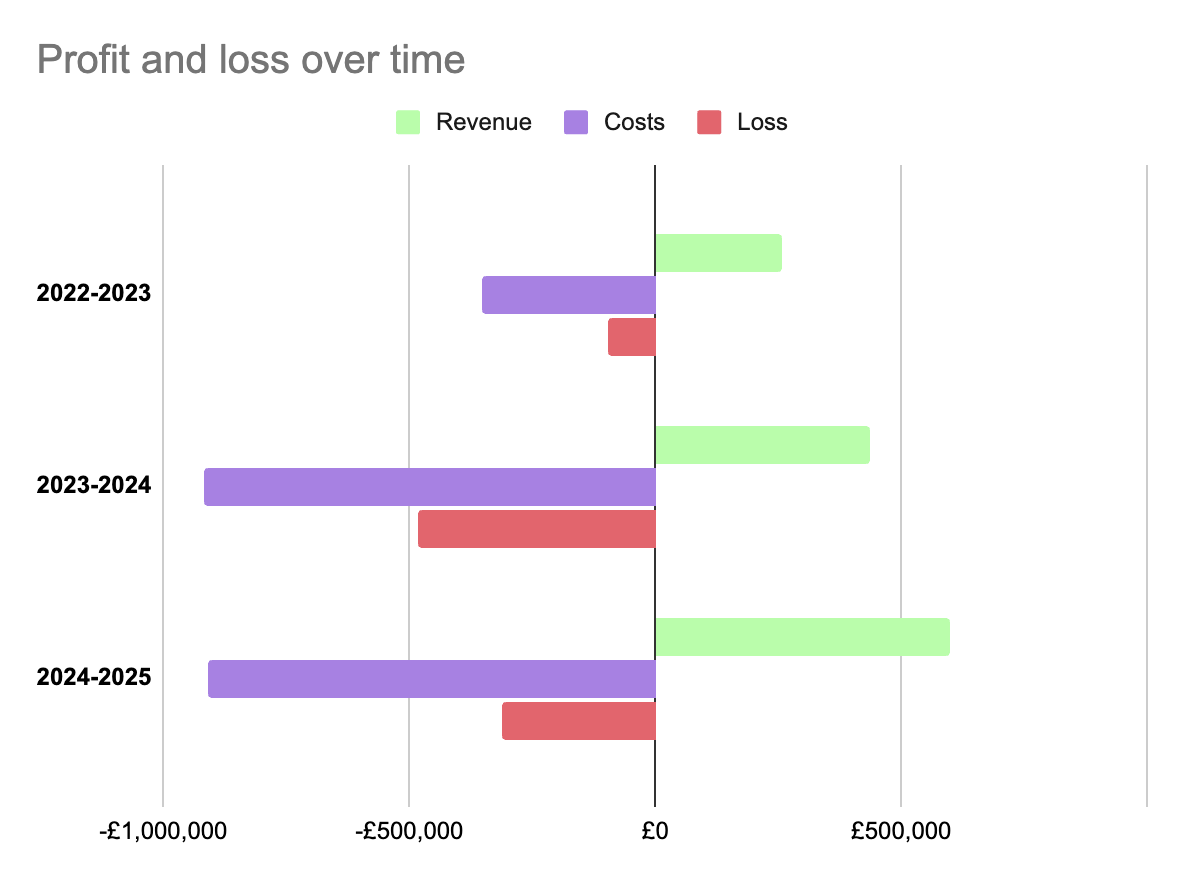
The Matrix.org Foundation’s financial profile over time
The main revenue stream is membership, in particular thanks to Automattic's Gold membership which accounts for 50% of our revenue, followed by donations and the newest stream: events, via sponsorship and tickets. We also introduced Premium Accounts on the matrix.org homeserver at the end of the year which is looking like a promising revenue stream for this year.
However, the Foundation is still disproportionately dependent on Element’s in-kind donations and financial support, which is unsustainable. But the good news is that it isn't a fatality: if the myriad of bigger organisations using the protocol step up and follow DINUM’s example by becoming members of the Foundation, it will get its full independence.
🔗Looking forward
And eventually, the report gives a peek into the plan for 2026, via our main objectives and the key projects we will be working on.
Reaching break-even is our main priority (again) this year, alongside keeping the protocol secure and evolving, ensuring it is easy to maintain a safe network, and keeping the ecosystem ticking. But we’re adding a strong focus on how the Foundation functions as an organisation, in order to be more efficient with our limited resources, and leverage the energy of our great community of volunteers.
We are also looking to improve on our reporting (here is the first step checked! ✅), both on the execution and the frequency, for increased transparency.
🔗To summarise
All in all, this Public Annual Report should make it clear that we are being the most impactful we can with our very limited resources, but the lack of budget is hindering the progress of Matrix and putting its adoption at risk, just as its relevance is stronger than ever as the answer to many challenges in today’s world.
On the plus side, we have an achievable plan to get the Foundation to break-even by the end of the year, if the organisations using and building on top of Matrix step up and start supporting it. But the more we can go beyond the current minimum viable needs, the more we will be able to invest in accelerating the protocol, fostering the ecosystem, and keeping the network safe, bringing more value to all our users.
Now grab a coffee, and download the report from this link: enjoy your reading!
The Foundation needs you
The Matrix.org Foundation is a non-profit and only relies on donations to operate. Its core mission is to maintain the Matrix Specification, but it does much more than that.
It maintains the matrix.org homeserver and hosts several bridges for free. It fights for our collective rights to digital privacy and dignity.
Support us