As you can see in Matrix Live this week, we are into the final few days before the Conference!
The event is a team effort, and we're very appreciative of the help of our volunteers (40 of you!). We have a couple of slots (and hoodies!) left if you're willing to help out - just take a look at the volunteer schedule. Maybe there is a free shift during a talk you want to see? How about you help film or record it! If you are willing and able to help out, book a slot!
We are also grateful to our sponsors - their contribution plays a critical role in the Foundation’s ability to run the Conference and progress towards sustainability in general. Thank you!
We're looking forward to seeing many of you in Malmö and Copenhagen!
If you're not able to join us in person, we hope you'll be following along online.
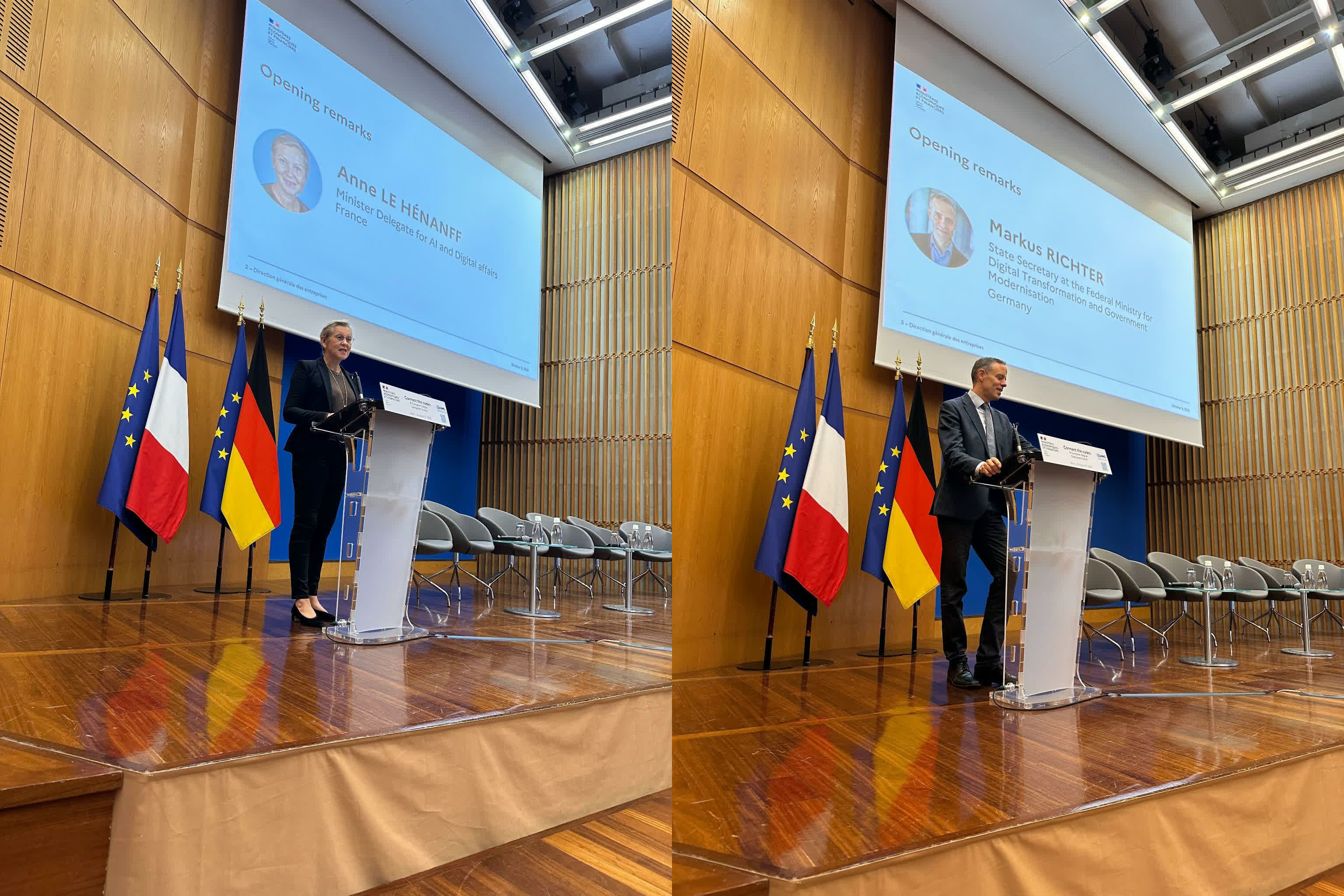
A few years ago, it would have been unthinkable that Governments could have dedicated open source and digital commons strategies championed by ministers. But that has changed profoundly: in June, the European Commission unveiled a European Tech Sovereignty Package, which identified some €264 billion spent annually on proprietary, non-European products and services as a strategic risk. The Matrix Foundation has been a driving force in this change. Last week, I was in Paris representing Matrix at an event hosted by the General Directorate for Enterprises to discuss the vital role open source plays in Europe’s digital policy agenda. The event was opened by the French Minister Delegate for AI and Digital affairs Anne Le Henanff and the German State Secretary at the Federal Ministry for Digital Transformation and Government Modernisation (BMDS) Markus Richter. At the same time our Developer Relations lead, Andy Piper, was in Luxembourg speaking on a panel with a new European body that grew out of the Tech Sovereignty Package: the Digital Commons European Digital Infrastructure Consortium (DC-EDIC).
The French and German ministers opened the DGE open source event.
The DC-EDIC was created in December last year with the mission to “develop, maintain, and scale digital commons for Europe”. The finalisation of an open call for expert advisors completed the set-up of a first-of-its-kind governmental body that aims to strengthen European digital sovereignty by building, financing, and deploying open source infrastructure solutions. The DC-EDIC is an exciting opportunity for the whole of Europe to catalyse the use of digital commons and ensure the commons are sustainable.
With 12 years under our belt spent building and maintaining Matrix as an open standard, taking it to the point where it serves as the backbone of communications for millions of European civil servants, we have built a strong understanding of the gaps in the market and ecosystem that hold back the sustainable use of digital commons. Here are our recommendations for how the DC-EDIC can maximise the impact of its five goals.
One of the highlights of the early days of Matrix was attending the inaugural Decentralised Web Summit back in July 2016 at the Internet Archive. This was an amazing opportunity to meet and collaborate with a huge range of decentralisation projects trying to "lock the web open" and fight back against the perils of centralisation: ranging from the original gangsters (the Web, WAIS, Xanadu, and the Internet itself) through to the newer generation of projects.
Fast forward 10 years, and we were very happy to be able to attend the July 2026 incarnation too! This time it was held outside Berlin at the amazing Alte Hölle collective; what better place to fight surveillance capitalism from than a former Stasi holiday camp. Happily many of the faces and projects from earlier DWebSummits and DWebCamps were present and it was fantastic to sync with folks from ATProto, Spritely, Iroh, P2Panda, Willow and others.
Communication for the camp ran primarily on Matrix, and we were very grateful to end up with Matrix featuring in 4 different sessions: A dedicated talk on the current state of Matrix and all the new P2P Matrix development; a fireside chat on 12(!) years of Matrix and what comes next; a panel looking at how decentralisation has evolved since the 2016 summit and where it might go next; and finally a panel on the state of P2P in general.
The reason for talking about it now is that all the videos have now been published - so, if you missed out on attending at the time, now is the opportunity to sit back, relax, return to the beginning of summer and catch up on what happened at DWebCamp. For your convenience and viewing pleasure, here are the main sessions which featured Matrix:
It's finally October, the month of The Matrix Conference 2026! Within only 18 days from publishing this blog, the Matrix community and ecosystem meets in Malmö, Sweden for 3 days of conference, followed by another day of hacking and collaborating in Copenhagen, Denmark!
While the Conference is primarily an in-person event #LocalFirst, it will be accompanied with live streams from all 3 conference stages during the 2 main conference days, powered once more by the amazing c3voc! And of course we could not miss our chat rooms to virtually represent the physical stages on Matrix itself, a "General" chat for the hallway track, hackathon, and more. You can now find all of these grouped in this year's Conference space#conference-2026:matrix.org, and also on the Conference website soon. Naturally, the chats are just as practical if you will be attending in person, as we will be posting news and you can get in touch with other attendees, both remote and present! Note that rooms are read-only for now and will become available for chatting closer to the start of the Conference. Speakers and volunteers will also find that the respective private rooms are inside the same space.
Speaking of volunteers: Here's your chance to join the volunteer chat, get a limited Sweden-colored volunteer hoodie, and most importantly help make MatrixConf happen!
We have made some (hopefully final) adjustments so the shifts in our volunteering system match our schedule more precisely, and also added a couple more shifts! If you're interested in participating in one of our workshops, this should be particularly interesting to you!
Finally, our ticket reserves are starting to dwindle, so if you are planning to attend in person, get your ticket!
The Matrix Conference is happening in just a few weeks! (you may have heard about it? 😉)
Join us in Malmö for talks, workshops, and discussions about the future of Matrix. Go to the website for more details, and to get your tickets.
If you have already bought your ticket, these are now available for download or for adding to your digital wallet. Speakers should check their email to find their voucher for a ticket, and follow the instructions in the email to get invited to the speakers' room on Matrix.
The volunteer system has been updated, with some very last volunteer slots available.
We will have a new range of Matrix stickers available! If you have a Matrix-related project, make sure to bring your own stickers for the sticker exchange.
This week, we are happy to reveal that the pre-event social 🪩 will be held at Babel Malmö, close to the conference venue, on the evening before the main conference content begins.
Hello! This Week in Matrix aka TWIM is our weekly update on what is going on in the Matrix ecosystem (the clue is in the title…!)
You can learn more about how we manage submissions to TWIM in the guide. The basic system is that news updates are posted to the Matrix room #thisweekin:matrix.org, and our friendly bot helps us to categorise the entries to output something that is - mostly - ready to publish. After that, we do some light editing, primarily to format things correctly. TWIM production is a collaborative effort, between myself (Andy, on behalf of The Matrix.org Foundation); the Website & Content Working Group; and of course, everyone that shares their news items every week.
Our goal with This Week in Matrix is for it to showcase the progress of Matrix projects, and the vibrancy of our community. We want it to be interesting and fun to read, as well as being informative to folks that don’t have time to follow everything going on across all the different channels.
We know that it can be a bit of work to post something that’s interesting, but it really helps when the news is authentic, novel, or otherwise impactful. A pattern we’ve noticed is that some projects are summarising changelogs, instead of highlighting updates that might be most interesting for people (meaning, people that use the software, developers, spec authors, and more). In other cases, we’ve seen submissions with far less substance - for example, without any code, or without a pointer to a place for readers to ask questions and learn more. We’re excited to see different new apps emerging, but we also want to have a mixture of news, rather than having the same things featured every week.
You can share images with your news submissions, to make them more visually appealing. One of the editors can help with that, so ask us in the TWIM room. If you're posting something about a client app, it helps us if you can describe what the image is demonstrating and what readers might want to be looking for in it.
All of this is to note that we’re adding some editorial curation to TWIM, in order to keep things on track - and yes, that involves some more proactive choices. If projects show up every week, we might choose to reduce the coverage to keep the content fresh. If there is not enough information in a submission, we may hold it back, or ask for it to be rewritten. That said, we're also keen to keep hearing from everyone. Help us keep This Week in Matrix an exciting and interesting read every week 🫶🏻
The countdown to The Matrix Conference 2026 continues. Watch Matrix Live for a sneak peek, and take a look at the full schedule (and then, get your ticket!)
The countdown to The Matrix Conference 2026 is on! We're excited to continue to announce the sessions you can expect to see at the conference, which takes place in Malmö, Sweden 🇸🇪 on 20-22 October, and concludes with a hackathon in Copenhagen, Denmark 🇩🇰 on 23 October.
This week, we thought we'd mention some more talks that have been confirmed for the conference, including:
A Stammtisch ("regular's table") is a German meetup format where those with a shared interest meet regularly for discussion, exchange, and socialising.
We've been bowled over by the volume of submissions for this year's conference in Malmö 🇸🇪! We're not quite ready to reveal the complete schedule, but the team has been busy sending out confirmations to speakers. If you submitted to our call for papers, check your email and (most importantly) if your session was accepted please click the required link to confirm your attendance.
You can have a look at an initial set of confirmed talks here. Note that this is not yet the full set of talks, as we're still working with speakers on their proposals. You can expect to hear more over the next couple of weeks.
Advance notice that we'll have a sticker swap table at The Matrix Conference this year. We want to celebrate, share and spread knowledge of the different community projects that build on Matrix, and what better way to do that than via the medium of stickers 💫 Bring your stickers to share with others, and find out about other projects at the same time.
If you have a project logo to share with the rest of the ecosystem, we'd love to see it on the sticker swap table 🙇🏻 there's also a "booth kit" for The Matrix.org Foundation that pops up at other events throughout the year, and we'll be happy to spread awareness of ecosystem projects via the booth (if there are any stickers left over, that is...). Need help with how to create stickers for your project, or want to send us some to share in case you can't make it to the event? Talk to the Events Working Group #events-wg:matrix.org.
This is also a good time for a reminder to get your ticket for The Matrix Conference 🎟️ (if you haven't done so already). It is shaping up to be an excellent few days of talks, hacking, networking, and celebration.